
“A shapeshifting dragon whose sparks and smoke rings are only the beginning of his surprises.”
With Keepers of Knowledge and Truth, Sandy Kelly delivers a sequel that deepens its emotional focus while expanding the scope of its fantasy world. Where the first book centers on preparation and discovery, this installment turns its attention to recovery, leadership, and consequence. The result is a more introspective narrative that challenges its protagonist in ways that feel earned rather than imposed.
The story resumes after Jesse Finch’s captivity, an experience that leaves lasting damage. His magic is blocked. His confidence fractured. His sense of identity uncertain. Rather than glossing over this trauma, Kelly allows it to shape the book’s tone. Jesse does not return as a stronger hero simply because time has passed. He returns burdened, cautious, and unsure of his place among the Keepers.
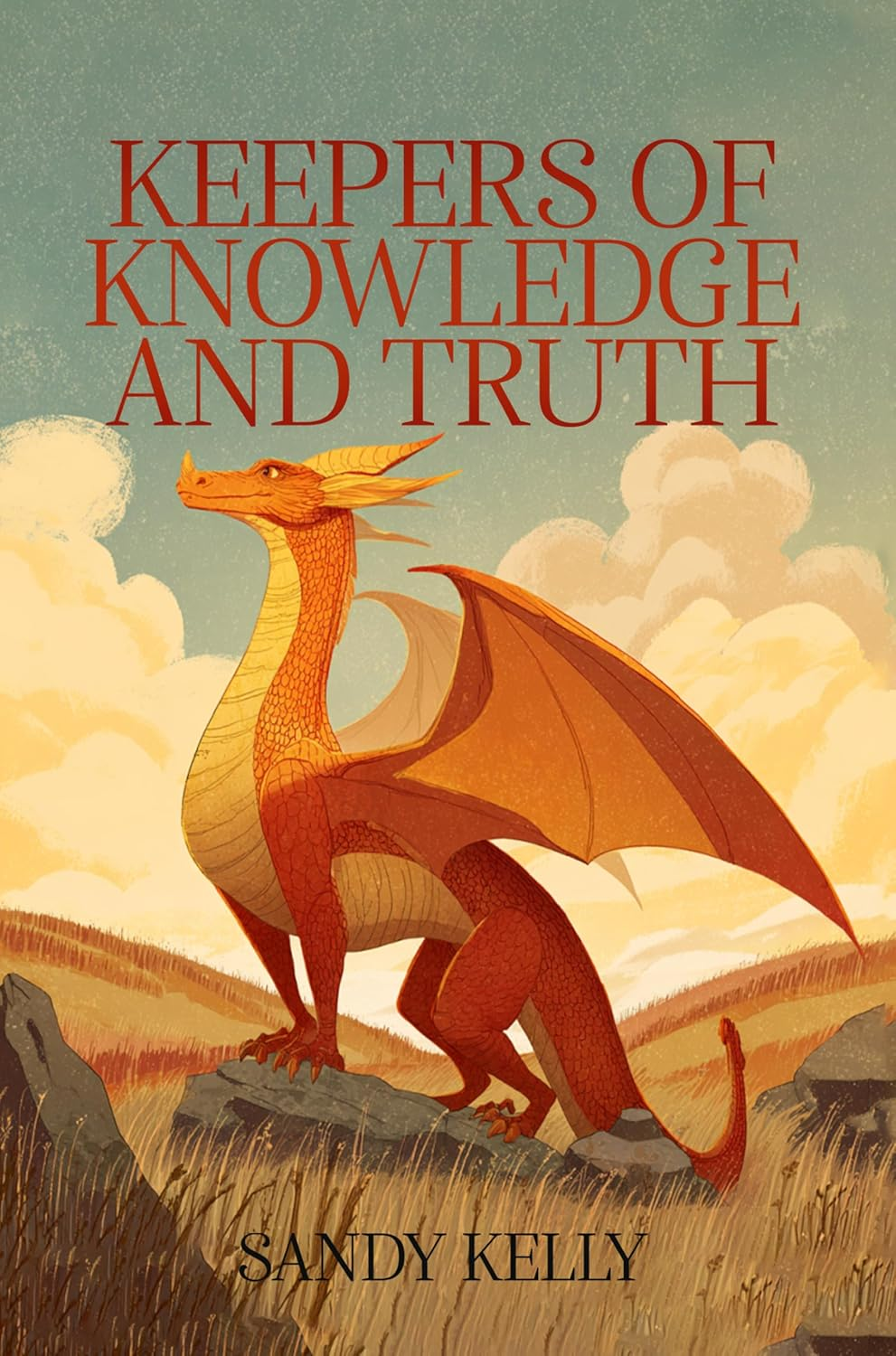
This emphasis on healing distinguishes the novel from many fantasy sequels. Jesse’s recovery unfolds slowly, marked by frustration and self doubt. His bond with Rambo becomes increasingly important, providing steadiness when his own instincts fail him. Their relationship remains one of the series’ emotional anchors, built on trust rather than hierarchy.
The introduction of the Toulonians represents a significant expansion of the world. These bird like beings are defined by intelligence, patience, and a different approach to magic. Their healing ritual serves as a turning point, restoring Jesse’s inner balance rather than simply returning his abilities. The scene avoids spectacle, focusing instead on clarity and release. It reinforces the idea that healing is as much emotional as it is magical.
Kelly also raises the stakes by reshaping the world itself. Tazeron’s influence alters terrain, introduces floating cities and underwater caverns, and changes how creatures behave. These environmental shifts serve a narrative purpose beyond visual interest. They force characters to adapt, rethink strategies, and accept that the familiar can no longer be trusted. Danger feels constant, not because of relentless action, but because stability has been removed.
Leadership emerges as a central theme. Jesse’s rise is not immediate or unquestioned. His blessing by Chaelea and the crown of light mark a symbolic transition, but authority comes through action and restraint. Jesse listens. He weighs consequences. He accepts responsibility without seeking dominance. His leadership style reflects the lessons established in the first book, particularly the value of focus and foresight.
Group dynamics continue to evolve. Apprentices, seasoned Keepers, and non human allies such as Oongo and the apes all contribute meaningfully. Unity is portrayed as a necessity rather than an ideal. No single character can carry the burden alone, and the narrative reinforces this through shared decision making and mutual support.
The novel’s pacing mirrors its themes. Some readers may find its reflective passages slower than expected for a fantasy sequel. However, this deliberate tempo allows the emotional stakes to breathe. The evolving war against darkness feels threatening precisely because it unfolds gradually, suggesting long term consequence rather than immediate resolution.
Keepers of Knowledge and Truth succeeds as a sequel by resisting escalation for its own sake. Instead, it deepens what came before, focusing on trust, healing, and courage under pressure. Kelly demonstrates confidence in her characters and her world, allowing growth to emerge organically.
A thoughtful continuation that values emotional realism as much as fantasy structure, Keepers of Knowledge and Truth strengthens the series’ foundation while preparing readers for the challenges still ahead.
Head to Amazon to purcahse your copy: https://www.amazon.com/dp/B0FWLC7BN9.